Starting a company is exciting, but building one that can scale requires more than a great idea. In the early stages, founders focus on validating their product, finding their first customers, and proving there’s real demand for what they’re building. Once that foundation is in place, the next challenge is sustainable growth, and that’s where series a funding comes in.
If you’ve ever wondered what is series a funding is, you’re not alone. It’s one of the most important milestones in a startup’s journey, yet it’s often misunderstood. Many first-time founders think it’s simply the next funding round after seed investment. In reality, it marks a major shift in how investors evaluate a business.
At this stage, investors aren’t just backing an idea; they’re investing in a company that has demonstrated traction, understands its market, and is ready to grow. Raising a Series A round is less about securing capital and more about proving that your startup can become a scalable business.
For aspiring entrepreneurs preparing to build companies, whether they’re early in their careers, transitioning from existing roles, or pursuing entrepreneurship full-time, understanding Series A funding is essential. Even if fundraising isn’t an immediate goal, knowing what investors expect helps founders make smarter decisions from day one.
What Is Series A Funding?
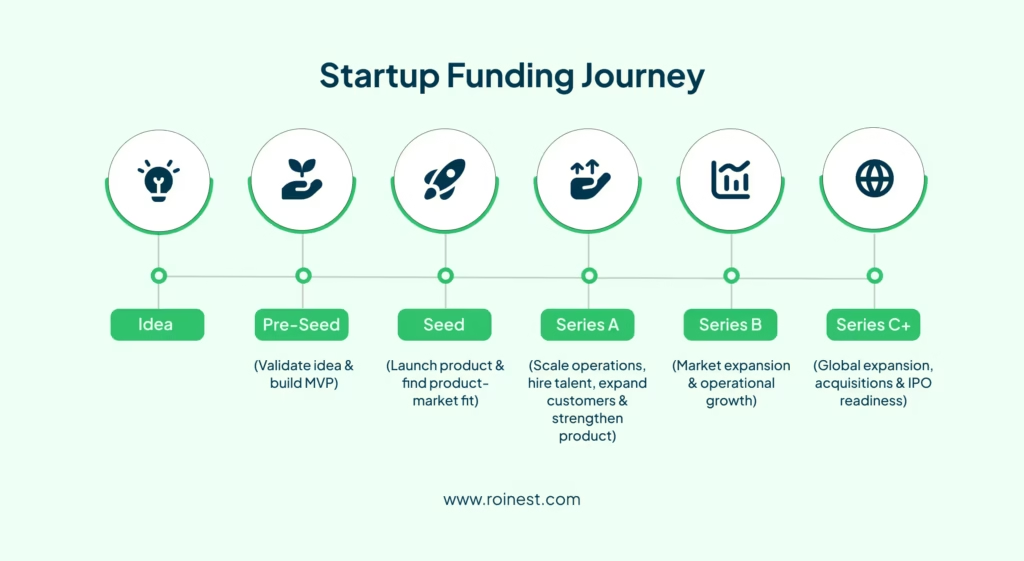
Series a funding is the first major institutional investment round a startup typically raises after achieving early market traction. Unlike pre-seed or seed funding, which helps founders validate an idea or launch a minimum viable product (MVP), Series A is focused on scaling a business that has already shown signs of success.
By this stage, startups generally have a working product, paying customers, and evidence that their business model can grow. The capital raised is often used to expand the team, improve the product, increase customer acquisition, strengthen operations, and enter new markets.
Series A rounds are usually led by venture capital firms, often with participation from existing investors or strategic partners. According to the National Venture Capital Association (NVCA), venture-backed companies continue to play a significant role in innovation and economic growth, making institutional investment an important milestone for high-potential startups.
For founders, however, Series A represents much more than funding. It signals that experienced investors believe the company has the potential to build a sustainable and scalable business.
Why Is Series A Funding Important?
Funding is often seen as the finish line for startups, but in reality, it’s a tool that enables growth.
Series A funding gives startups the resources to move from building a product to building a company. It allows founders to hire experienced talent, strengthen operations, invest in product development, and expand into larger markets.
Just as importantly, Series A investors bring strategic value. Venture capital firms often provide mentorship, industry expertise, hiring support, customer introductions, and guidance for future fundraising rounds.
This support becomes increasingly valuable as startups transition from small founding teams to growing organisations. Founders must build repeatable processes, create scalable systems, and make better strategic decisions while maintaining momentum.
Research from CB Insights consistently shows that one of the biggest reasons startups fail is the lack of market demand, not the lack of funding. The lesson is clear: investors don’t fund ideas; they fund businesses that have demonstrated traction and customer validation.
How Does Series A Funding Differ from Seed Funding?
One of the biggest misconceptions among first-time founders is that Series A funding is simply a larger version of seed funding. While both involve raising investment, they serve different purposes.
Seed funding helps answer one question:
“Can this business work?”
Series A funding asks another:
“Can this business scale?”
During the seed stage, investors are often willing to back promising ideas, early prototypes, or strong founding teams. Revenue may be limited, customer feedback is still evolving, and the business model is being refined.
By the time a startup reaches Series A, expectations have changed. Investors typically look for:
- Product-market fit
- Consistent customer growth
- Revenue or strong traction metrics
- A repeatable customer acquisition strategy
- A scalable business model
- A capable founding team
Today’s startup ecosystem gives founders more access to resources than ever before, but success still depends on disciplined execution. The startups that raise successful Series A rounds are usually those that have spent time validating their product, understanding their customers, and building measurable momentum before approaching investors. This mirrors the broader evolution of the startup ecosystem, where execution has become a stronger differentiator than opportunity itself.
What Do Investors Look for During Series A?
By the time founders approach Series A investors, vision alone isn’t enough. Investors want evidence that the startup is ready to scale.
Most evaluate four key areas:
- Product-market fit: Customers genuinely need and value the product.
- Business performance: Revenue, user growth, retention, and traction demonstrate progress.
- Scalable business model: Customer acquisition, pricing, and operations can support long-term growth.
- Founding team: Investors back leaders who can adapt, execute, and build strong organisations.
Ultimately, Series A funding is an investment in both the business and the people building it.
How Can Founders Prepare for Series A?
Preparation starts long before fundraising begins.
Founders should focus on building measurable traction, understanding key business metrics like CAC and LTV, developing a clear growth strategy, and building relationships with investors early.
Rather than treating fundraising as the goal, successful founders prioritise creating a business that customers genuinely value. Strong execution naturally makes fundraising conversations easier.
If you’re preparing to scale your startup, explore the founder resources and support available at ROINest: https://roinest.com/.
Conclusion
Understanding what is series a funding is about more than learning how startups raise capital. It’s about understanding what investors expect from businesses that are ready to grow.
Series A isn’t a reward for having a great idea. It’s recognition that a startup has built enough traction, validated its market, and developed a clear path to scale.
For founders, the best preparation isn’t building the perfect pitch deck; it’s building a business customers genuinely want. Funding follows businesses that demonstrate consistent execution, measurable progress, and sustainable growth.
As today’s startup ecosystem continues to evolve, capital is becoming increasingly accessible. The real challenge is no longer finding investors; it’s building companies that deserve investment through disciplined execution and long-term thinking.
For more founder insights, startup resources, and ecosystem updates, visit ROINest and follow ROINest on LinkedIn.