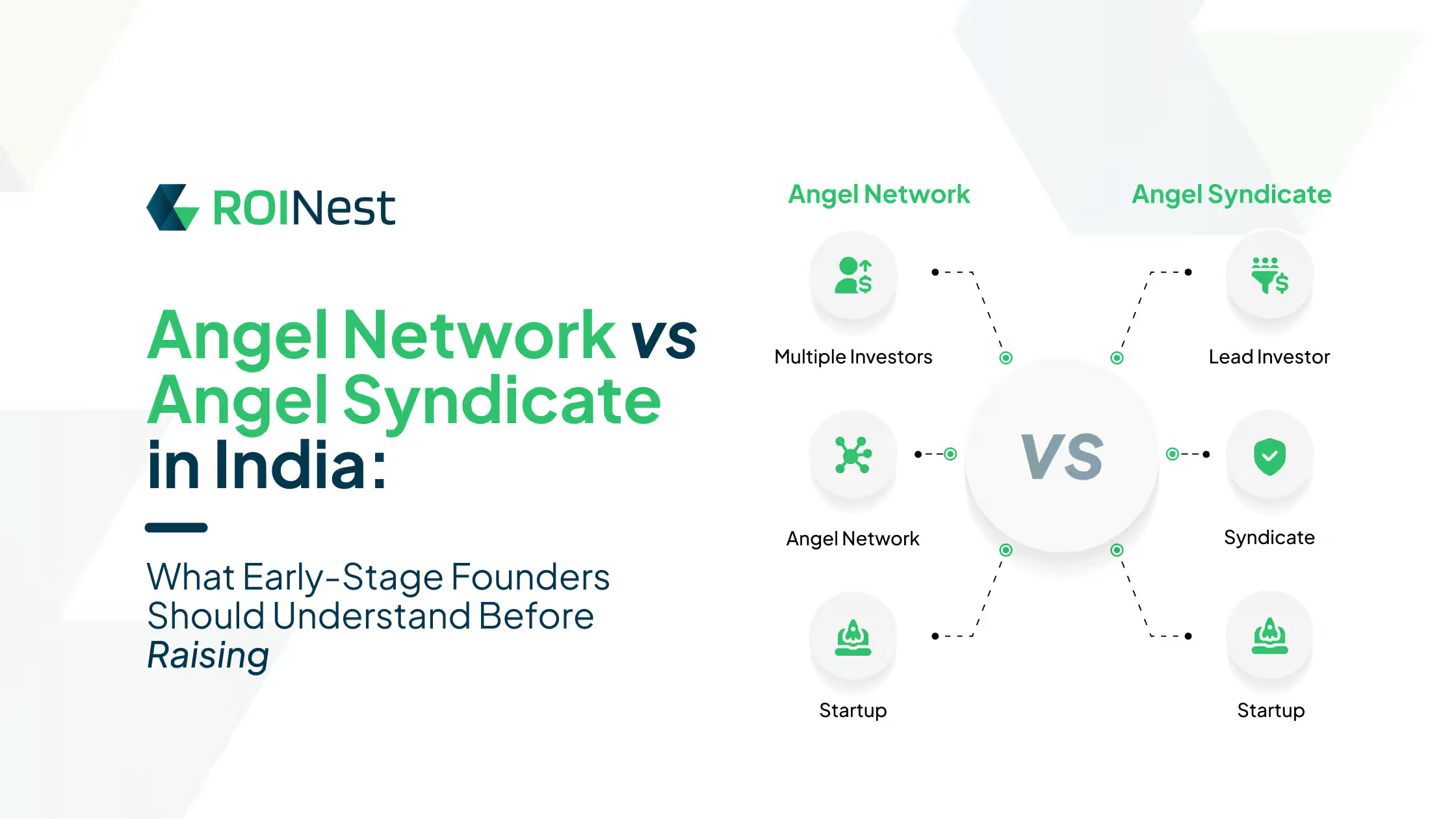
An angel network can help early-stage founders meet investors, but it is only one route. Some founders speak to one angel investor directly, some raise through an angel syndicate, some enter a founder-led startup studio because they need product thinking, GTM support, hiring help, sales motion, and market access.
India now has over 2 lakh DPIIT-recognised startups, and around 50% come from Tier 2 and Tier 3 cities. The ecosystem is wider now, but access is still uneven.
So before a founder searches how to find angel investors, it helps to understand what kind of investor access they are actually looking for.
What Is An Angel Investor?
An angel investor is an individual who invests personal capital into an early-stage startup.
This person can be anyone. Some angels invest because they understand a sector deeply, others because they want exposure to startups. A few bring real operator value. Rest mainly write a cheque.
Angel investment is sought out during the earliest part of a company’s journey. It often comes before institutional VC funding. It may support proof of concept, early product building, first customers, hiring, or a sharper market test.
India’s own startup funding infrastructure also reflects this early-stage gap. The Startup India Seed Fund Scheme was created with an outlay of INR 945 crore to support proof of concept, prototype development, product trials, market entry, and commercialization.
What is An Angel Network?
An angel network is a structured group of angel investors who review startup opportunities through a common platform, process, or community.
A founder applies to the angel network, pitches to screening members, goes through feedback or diligence, and then gets introduced to interested investors within the group. Networks can be sector-focused, geography-focused or broad and open to many types of startups.
The angel network model gives founders access to more investors without having to chase each one separately. It also gives investors a cleaner way to discover startups, discuss deals, and reduce individual effort during the first layer of screening.
Getting in front of an angel network means the startup has entered a room where several investors may look at the opportunity. Each investor still decides independently.
For early stage startup funding, an angel network can be useful when the founder already has basic proof in place.
What is An Angel Syndicate?
An angel syndicate is a group of investors who invest together in a specific deal, often led by one experienced investor.
The lead investor plays a bigger role here. They may source the deal, speak closely with the founder, review the business, negotiate terms, and bring other investors into the round. The other investors then follow the lead if the opportunity fits their interest.
This is different from a broad angel network.
In an angel network, the founder may pitch into a community or platform where members decide individually. In an angel syndicate, the process is often more deal-led. One person or a small group builds conviction first, and then opens the round to others.
For founders, an angel syndicate can move faster if the lead is serious and respected. It can also help reduce repeated conversations. Instead of explaining the same round to ten people separately, the founder may work through one lead who brings the rest together.
Still, the quality of the syndicate depends heavily on the lead.
A strong syndicate lead can help with pricing, investor alignment, paperwork, and follow-on support. A weak one may only forward the deal around and call it fundraising support. Founders should learn to spot the difference early.
In India, angel funds now also sit under a tighter regulatory frame. SEBI’s revised 2025 framework says angel funds shall raise funds only from accredited investors, and new angel funds must onboard and offer investment opportunities to accredited investors only.
This regulatory point does not apply to every informal angel conversation. Still, it shows that early-stage capital is becoming more structured. Founders should know who they are speaking to, what structure they are raising through, and how the investment will actually come in.
Angel Network vs Angel Syndicate: Key Differences
An angel network and an angel syndicate, both can connect founders with private investors and can help with angel investment. Both can support early stage startup funding.
A founder should not pick one only because it gives “access.”
The more useful questions are simple. Who is making the decision? Who is leading the conversation? Who understands the category? Who will help after the cheque comes in?
| Area | Angel network | Angel syndicate |
| How it works | A group of angel investors reviews startup opportunities through a shared platform or process. | A lead investor brings other investors into one specific deal. |
| Decision style | Investors may decide separately after seeing the pitch. | The lead investor often shapes interest, terms, and investor confidence. |
| Founder experience | The founder may pitch to a wider group and handle multiple follow-ups. | The founder may work more closely with one lead who coordinates others. |
| Speed | It can take time because several investors may need to review the opportunity. | It can move faster if the lead investor has strong conviction. |
| Best fit | Useful when the founder wants broader investor discovery. | Useful when the founder wants a more focused round with one trusted lead. |
| Risk to watch | Founders may mistake exposure for serious investment interest. | The round may depend too much on the quality and credibility of the lead. |
The angel network route works well when a founder wants wider visibility and can handle a more open process.
The angel syndicate route works well when a founder has found a strong lead investor who already understands the business and can bring the right people into the round.
Neither route is automatically better.
A weak angel network can waste founder time. A weak syndicate can create confusion. A strong angel network can bring useful investor depth. A strong syndicate can bring speed, focus, and cleaner round building.
When Should Founders Approach Angel Investors?
A founder does not need perfect revenue to speak to an angel investor, many angel rounds happen before institutional VC interest, but the founder should have enough clarity to explain the customer, the problem, the product direction, and why this team can build the company better than others.
For SaaS, B2B, adtech, AI, and technology-driven startups, angels look for a signal that the founder has gone beyond a deck.
That signal can be a product demo, active pilots, signed LOIs, early revenue, strong usage, domain depth, or a sharp customer insight that came from real conversations. In AI, a working prototype alone is not enough anymore. Investors will ask how the product becomes useful, repeatable, and hard to replace.
A founder is ready to approach angel investors when three things are visible.
First, the problem is specific.
“Helping businesses grow” is not specific. “Helping mid-market ad networks detect affiliate fraud before payout approval” is specific. It tells the investor who the buyer is, where the pain sits, and why the product matters.
Second, the founder has tested the market.
This does not always mean revenue. It means serious customer calls, pilot users, workflow mapping, paid experiments, or repeated inbound demand from a narrow customer segment. Founders who speak from actual market contact sound different. Angels can hear it.
Third, the use of funds is clear.
A founder approaching an angel network should be able to explain the same thing in simple words. What has been built? What has been tested? What has been learned? What will the capital change?
What Founders Should Prepare Before Speaking to Angels
A pitch deck is only one part of the preparation. Investors read the deck, yes. But they also read the founder. They listen for judgment, clarity, speed of learning, and how the founder handles weak spots.
Founders should prepare four things before speaking to an angel network, syndicate, or individual angel investor.
Build a clean founder story
The founder story should explain why this team is building this company.
It should connect experience, insight, and market timing. A founder from adtech who has seen broken partner reporting for years has a different reason to build a tracking product than someone who noticed the category last month.
Show the customer problem clearly
Founders often explain the product before explaining the pain.
A better flow starts with the buyer’s workflow. Where does the current process break? Who feels the cost? What happens if the problem is ignored? How is the buyer solving it today?
Investors want to know what the platform does, who will pay for it, why now, and how buying decisions happen.
Prepare numbers that do not fall apart
Early-stage numbers need to be honest and easy to understand.
Founders should prepare basic metrics like monthly revenue, pipeline, user activity, customer acquisition cost if available, churn signals, gross margin direction, sales cycle length, and burn.
For pre-revenue startups, show learning metrics. Number of customer calls. Pilot status. Prototype usage. Waitlist quality. Conversion from outreach to demo. Time saved in a workflow. These numbers help investors see movement.
Know what support is needed beyond capital
A founder needs hiring support, product architecture, GTM design, enterprise sales access, compliance guidance, pricing help, customer success setup, or market entry support.
An angel network helps with introductions. An angel syndicate brings focused investor support. A founder-led startup studio goes deeper into operating support because it works closer to the actual company build.
Founders should know which gap they are trying to solve before they choose the route.
Why Mass Outreach Does Not Work for Early-Stage Funding
Early-stage startup funding works better through relevance. A founder raising for a B2B SaaS product should not send the same message to a consumer investor, a crypto investor, a family office, and an adtech operator. The pitch may reach inboxes, but it does not reach conviction.
An angel network can help because it creates a more structured path to investors.
The founder should study three things before outreach. The investor’s past investments. The stage they prefer. The type of help they can give.
A founder building in AI infrastructure, for example, should look for angels who understand data, cloud cost, technical teams, enterprise buying, or developer adoption. A founder building an adtech product should look for investors who know media buying, attribution, agencies, networks, or fraud controls.
Generic outreach also makes the founder sound unclear.
A sharp investor note says who the startup serves, what has been built, what signal exists, and why the investor is relevant.
What Are Better Ways to Build Investor Access?
For a SaaS founder, the most useful angel network is the one where investors understand recurring revenue, retention, expansion, and customer success. For an adtech founder, the right investor knows attribution, partner ecosystems, campaign economics, and fraud risk.
For an AI founder, an investor who understands data quality, model cost, product defensibility, and enterprise adoption can be far more useful than a general cheque.
Founders can build investor access in a few ways.
Start with operators, not investors
Operators understand the small details that decide whether a startup can move from pitch to product to customer.
A former SaaS founder may spot a weak pricing model in five minutes. A revenue leader may know whether the sales motion is too heavy for the ACV. A product operator may see that the workflow is useful, but not painful enough for a buyer to switch.
These conversations lead to angel investor introductions, but with more context.
Build a narrow investor list
A narrow list saves time.
Founders should map investors by sector, stage, cheque size, geography, and operating value. A founder raising for startup funding India should not copy a generic global investor database and start sending cold messages to everyone.
The list should answer simple questions.
Has this investor backed similar stages? Do they understand India or the target market? Have they invested in B2B, SaaS, AI, adtech, or the category being built? Can they help with customers, hiring, partnerships, or follow-on rounds?
Use communities with real founder signal
Founders should look for groups where people actually build, review, refer, and support companies. This may include operator networks, sector communities, founder-led studios, angel network platforms, or curated programs that bring investors and builders closer.
Earn introductions through useful progress
Many founders ask for investor introductions too early.
A stronger approach is to share progress with a few relevant people before asking for capital. Product updates, pilot learnings, customer proof, hiring progress, or a sharper GTM plan can create confidence over time.
Why Does Investor Access Alone Not Make You Investor-Ready?
A founder can get meetings through an angel network, a warm introduction, an angel syndicate, or a startup program. The meeting itself does not fix a weak business case.
Investor readiness has more to do with operating clarity than pitch polish.
Product clarity
The product should solve a clear problem for a clear user.
This sounds basic, but many startups stay vague for too long. They try to serve too many customer types. They describe too many features. They present the product as a platform before proving one painful use case.
GTM clarity
Investors want to know how the company will reach customers.
A founder should explain the sales motion in plain language. Founder-led sales, outbound, channel partnerships, product-led growth, marketplace distribution, agency partnerships, or enterprise selling all behave differently.
Each one has a cost.
Each one needs a different team.
Each one creates a different timeline.
An angel investor may not expect the GTM motion to be perfect, but they will expect the founder to understand what has been tried and what has been learned.
Execution depth
Capital can pay for people, tools, and campaigns. It cannot automatically create discipline across product, tech, sales, marketing, customer success, finance, and hiring.
A startup studio model can help here when it is founder-led and operator-heavy. The value is not passive advice. It is shared building support, functional teams, startup frameworks, and access to people who have already worked through the early mess.
Angel investment can improve a startup’s odds when investors bring more than capital. Research summarized by NBER found that angel-backed firms were more likely to survive, create jobs, and exit the startup phase than comparable firms without angel backing.
Final Thoughts: What Should Founders Remember Before Raising From Angels?
Funding is not a substitute for company building. Early-stage founders often search how to find angel investors before they have shaped the business enough for the right investor to say yes. Build clarity first. Then build access.
Founders should understand their route before raising.
If they need broad investor discovery, an angel network may help. If they already have a strong lead, an angel syndicate may be better. If they need deep build support across product, tech, GTM, sales, marketing, customer success, and market access, a founder-led startup studio may fit better than either.
The next steps are practical.
Define the business clearly. Build a focused investor list. Speak to operators early. Prepare honest numbers. Know what kind of help is needed beyond money. Then choose the route that fits the company, not the route that sounds most impressive.
Follow us on LinkedIn for weekly updates and bite-sized informational content.
Frequently Asked Questions
1. How do I choose the right angel network for my startup?
Choose an angel network by fit, not popularity. Check whether its members understand your sector, stage, business model, and target market. A SaaS founder should look for investors who understand recurring revenue, churn, sales cycles, and expansion revenue. An AI or adtech founder should look for people who understand product depth, data quality, GTM, and buyer behaviour. In India, also check whether the network gives access to operators, mentors, and market connections, not only capital.
2. How much equity do angel investors ask for?
There is no fixed equity number for angel investment. It depends on the amount raised, valuation, company stage, risk, traction, and the founder’s negotiation position. Early rounds can feel expensive because the startup is still unproven, so founders should avoid giving away too much equity too early. A cleaner way to think about it is dilution across the next few rounds. The first angel investor should help the company reach a stronger next milestone, not leave the founder weak before the seed or VC round.
3. Is angel investment taxable in India after the angel tax change?
India proposed abolishing angel tax for all classes of investors in the Union Budget 2024 to support startup investment and innovation. This is useful for founders raising from angels, but it does not remove the need for clean paperwork, fair valuation support, cap table clarity, and proper compliance. DPIIT recognition can also matter for startup tax benefits, and eligible startups can apply for certain exemptions after recognition. Founders should still take professional tax and legal advice before closing an angel network or angel syndicate round.