
Introduction
The traditional method to building a startup is usually a founder, an idea and a long road full of trials and errors. But that’s not the only way to do it anymore. In fact, it usually isn’t the go-to method.
In recent years, the venture studio model has emerged as a structured, repeatable approach to creating startups — usually from scratch.
The catch is: banking on a single idea may or may not work. To cut down on the risk, a studio of this nature builds multiple companies in parallel using shared resources, capital and expertise. There’s also the fix of early stage startup funding, which can be an obstacle even when everything else is going right.
This complex format, often referred to as the venture studio model is gaining traction globally, especially amongst entrepreneurs keen on building the next big thing, with limited risk and higher chances of success.
But what is a venture studio, and what does it do in practice? This guide breaks it all down.
What is a Venture Studio?
A venture studio (also commonly known as a startup studio) is an organization that creates, builds and works on scaling startups internally. Unlike traditional ways of putting together a business, a studio of this kind usually works on:
- Helping founders grow their idea, right from the ground up
- Resolve specific challenges they are facing in building up their organization
- Aligning guidance or structure within the business, as required
- Assembling teams to execute concepts into MVPs
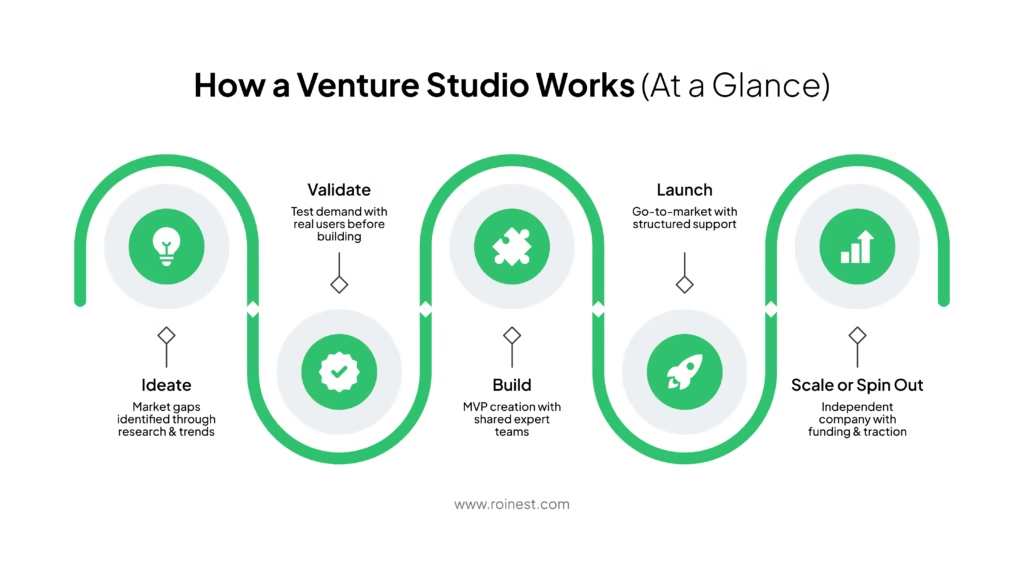
If you’re wondering how a venture studio actually makes the venture building work, here’s a gist of the process.
The Venture Studio Model Explained
The venture studio model is designed to systematize the entire process of venture creation, right to the point of fruition. Rather than relying on luck or individual brilliance to pull the entire system of venture building together, a startup studio sets up a repeatable process which works on multiple ideas at once.
This way, the probability of success becomes higher, and the risk taking can be limited (even when multiple ventures are being worked on simultaneously).
Let’s take a look at the steps that are involved in the venture studio model of startup building.
Idea Generation
The journey begins inside the startup studio. Ideas are generated through market research, trend analysis, and internal brainstorming.
There is a marked distinction in approach as well. The venture studio format relies on a market-based approach, while the traditional structure leans founder-led. As a result, a gap in the market or a clear problem statement is identified before the building is actually initiated.
Validation Process
No idea is selected simply based on the sound thinking of those leading the studio. It is vetted thoroughly for true validation. This process can include:
- Customer interviews
- Landing page tests
- Prototype development
- Early demand signals
Since a single venture is not worked on one-at-a-time, the emphasis is on either failing fast or validating quickly. Time and capital are both conserved in the process, leading to an allocation of resources towards viable ventures.
Building the Startup
Post-validation, the venture studio can start working on turning the idea into an actual startup. Each specialist can work on strategizing around their area of expertise within the given startup, accelerating the pace of work.
What’s more? Founders aren’t left to their own devices to figure out what to do next. Often at this point, moving from planning to action itself can take months, or even years. That’s why building within a studio of this nature, improves the overall time taken, from idea to release.
There are all kinds of experienced leaders present within such initiatives who are multi-time founders themselves. They are capable of driving various organizational functions in sync with founds, such as:
- Product management
- Engineering
- Design
- Growth marketing and GTM strategy
Spinning Out Companies
Once the startup begins to gain traction as a standalone venture, it is “spun out” as a separate entity. Here’s when the reigns change hands in real terms:
- A dedicated founding team, made of market-ready founders take over
- External start up funding (including venture studio capital) may be raised
- The company begins running their operations independently as a standalone venture
However, this doesn’t mean the studio has pulled support. The startup can still seek strategic guidance and advice through the studio, and equity may be retained by the studio.
Key Components of a Venture Studio
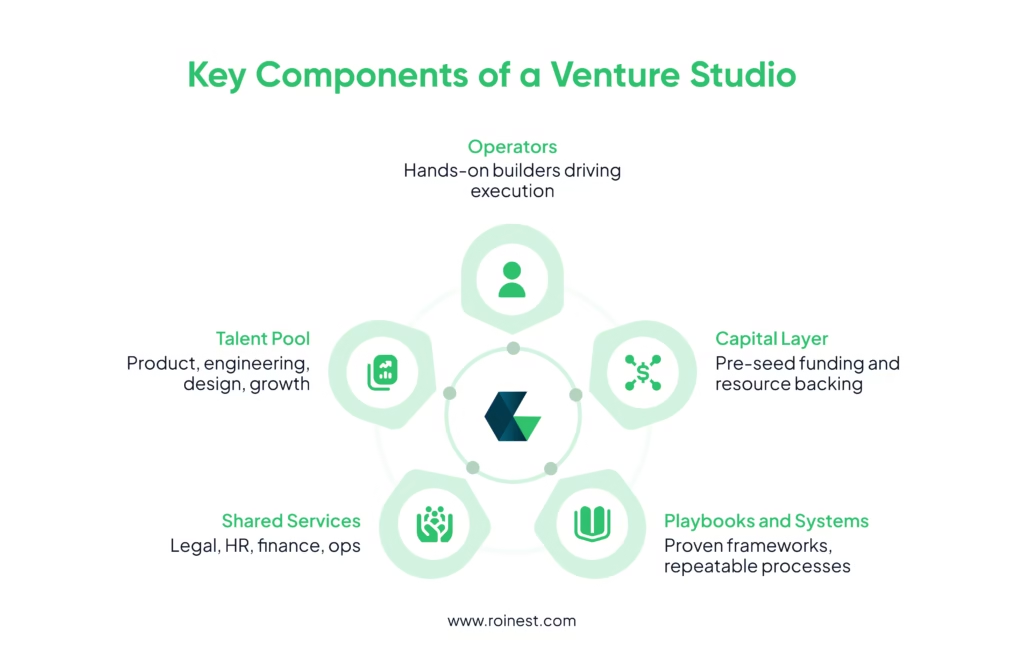
Active Co-founder
When you work within a structured studio setup, expect there to be an active partner or partners at all times, working through the most difficult challenges of building — with you. If you’re a solo founder with panache, but limited expertise or you’re part of a small team iterating on building a niche-relevant product, there’s resources and guidance to be found.
In fact, when you’re building within a venture studio, you’re on track to build a team (if required), before the venture starts operating independently.
Centralized Talent Pool
A major strength within such startup enabling formats is the presence of in-house experts, across domains. Instead of hiring a new team for every single venture, the shared team is able to leverage cross-venture and cross-domain learning into clear roadmaps that allow each startup to become viable.
Shared Resources
These in-house experts work together as a shared resource, offering value across operational disciplines such as HR, legal, accounting, marketing, sales or engineering.
Access to Capital
Additionally, startups that work with venture studios are able to access the capital within these organizations for the purpose of achieving scale.
Studios often fund the process of early-stage and pre-seed development themselves to reduce reliance on external sources and fracture equity in the initial stages.
Standardized Process
The hallmark of a true venture studio model is repeatability. Proven frameworks and models are applied across startups, increasing efficiency and success rates.
How Venture Studios Differ from Other Models
Venture Studio vs Venture Capital Firms
Both entities work towards building startups, but both differ in the manner of their execution and support.
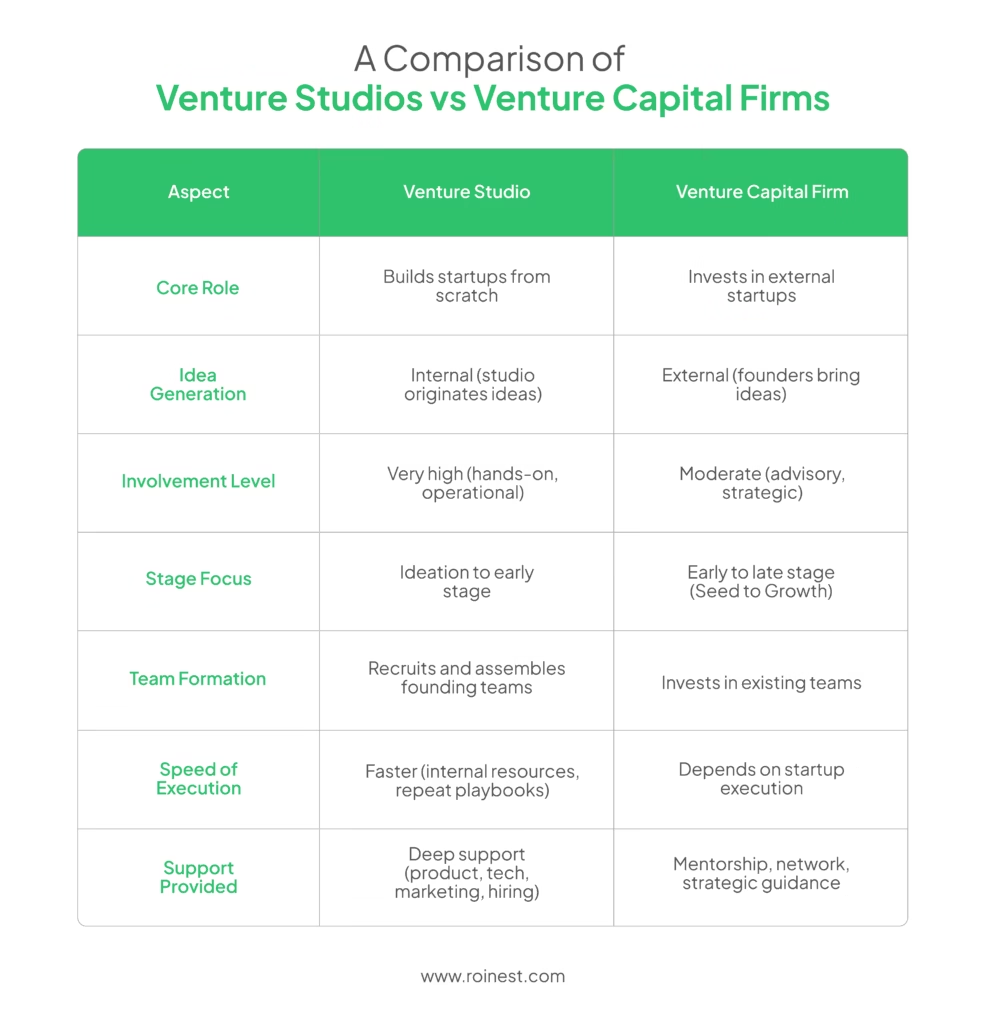
While venture studio create startups from scratch — working on ideas, building businesses from scratch and actively operating businesses through early stages —, venture capitalists invest in external startups but don’t associate with day to day operations.
The support is usually limited to providing funds for taking the venture to the next level.
Here is a complete list of differences between the two types of startup builders.
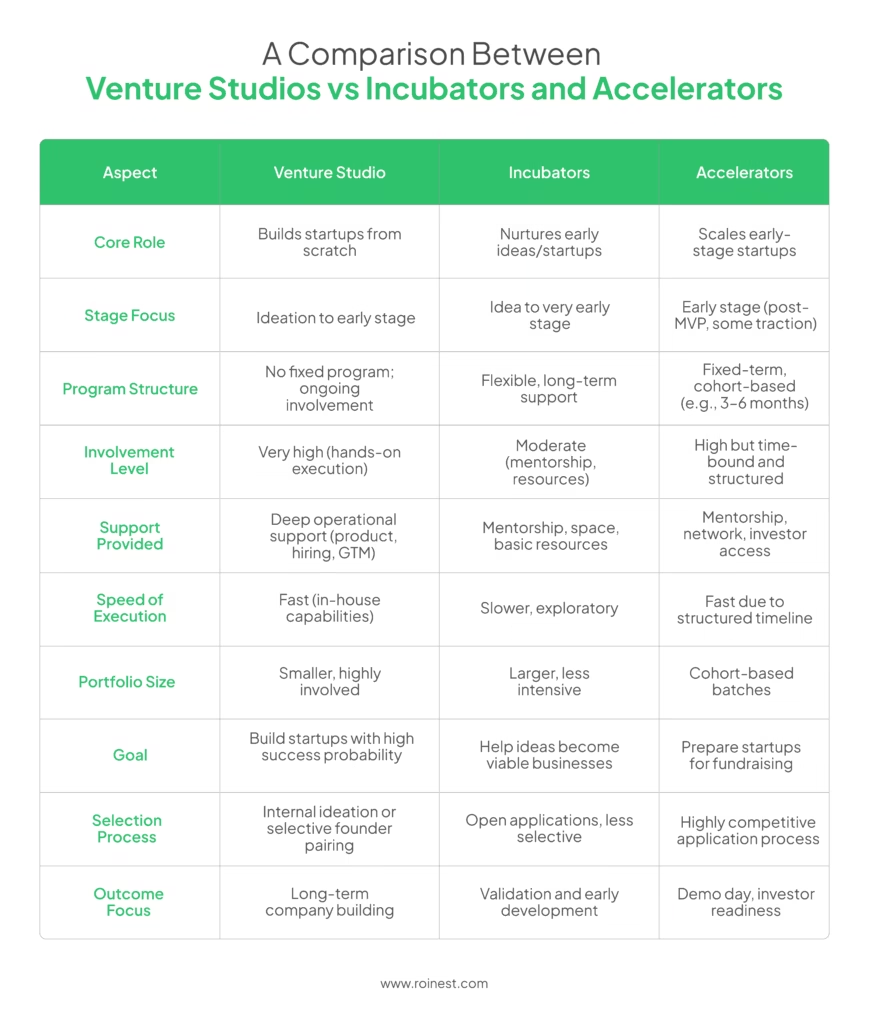
Venture Studio vs Incubators and Accelerators
Venture studios take a hands-on role in creating startups from scratch, often generating ideas internally and building teams and products in-house.
In contrast, incubators and accelerators support external founders — incubators help refine early ideas over flexible timelines, while accelerators run structured, short-term programs to scale startups. Studios offer deeper operational involvement and control, whereas incubators and accelerators focus on mentorship, validation, and angel investor readiness.
Here’s a look at all the differences between the two methods of business development.
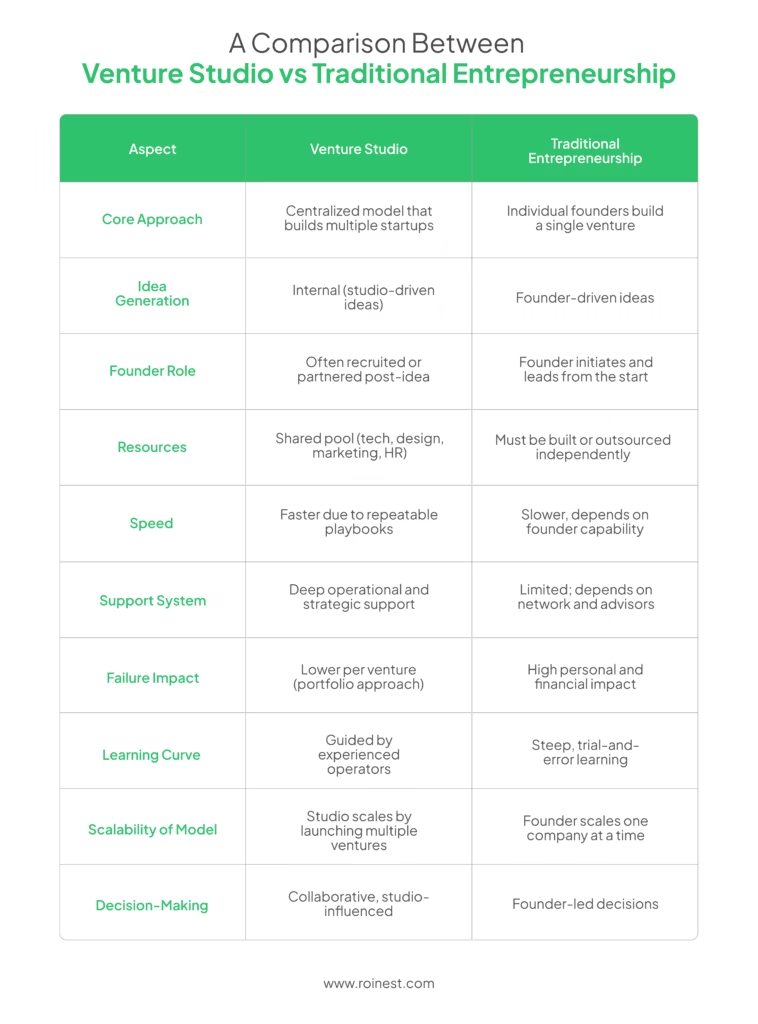
Venture Studio vs Traditional Entrepreneurship
Venture studios follow a systematic, repeatable approach to building companies by combining shared resources, capital, and expertise across multiple ventures.
Traditional entrepreneurship relies on individual founders to ideate, build, and scale a single business independently. While studios reduce risk through shared infrastructure and guidance, traditional founders retain greater control and ownership, but face higher uncertainty and must assemble resources, teams, and processes on their own.
Here’s how your experience can differ, depending on which one you choose.
Advantages of the Venture Studio Model
This particular model offers some unique advantages to founders who choose to build their own startup through it.
- Limited risk: Ideas are validated before any tasks involving heavy investment are taken up.
- Quicker execution: The fact of having shared teams improves the speed of the actual startup building.
- Higher success rates: Systematic process and a structured approach ensure that ventures built through this model make it.
- Access to expertise: Mentoring and guidance from experienced operators provides new and inexperienced founders with better outcomes.
- Capital efficiency: Overall, resource utilization across all ventures is optimized.
For many entrepreneurs, a venture studio offers a reliable model for succeeding in their endeavor to create something of their own, whether they choose to do it alone or with a small group of co-founders.
Challenges and Limitations
As with any model, there are crucial hurdles or limitations to consider. While for many, these may not pose much of a challenge, to others, they could be reasons to disavow the model entirely.
- Equity dilution: Founders often give up more ownership
- Creative constraints: Structured processes may limit flexibility
- Capital intensity: Studios require significant upfront investment
- Scaling complexity: Managing multiple startups simultaneously is difficult
Understanding these trade-offs is crucial to joining a startup studio.
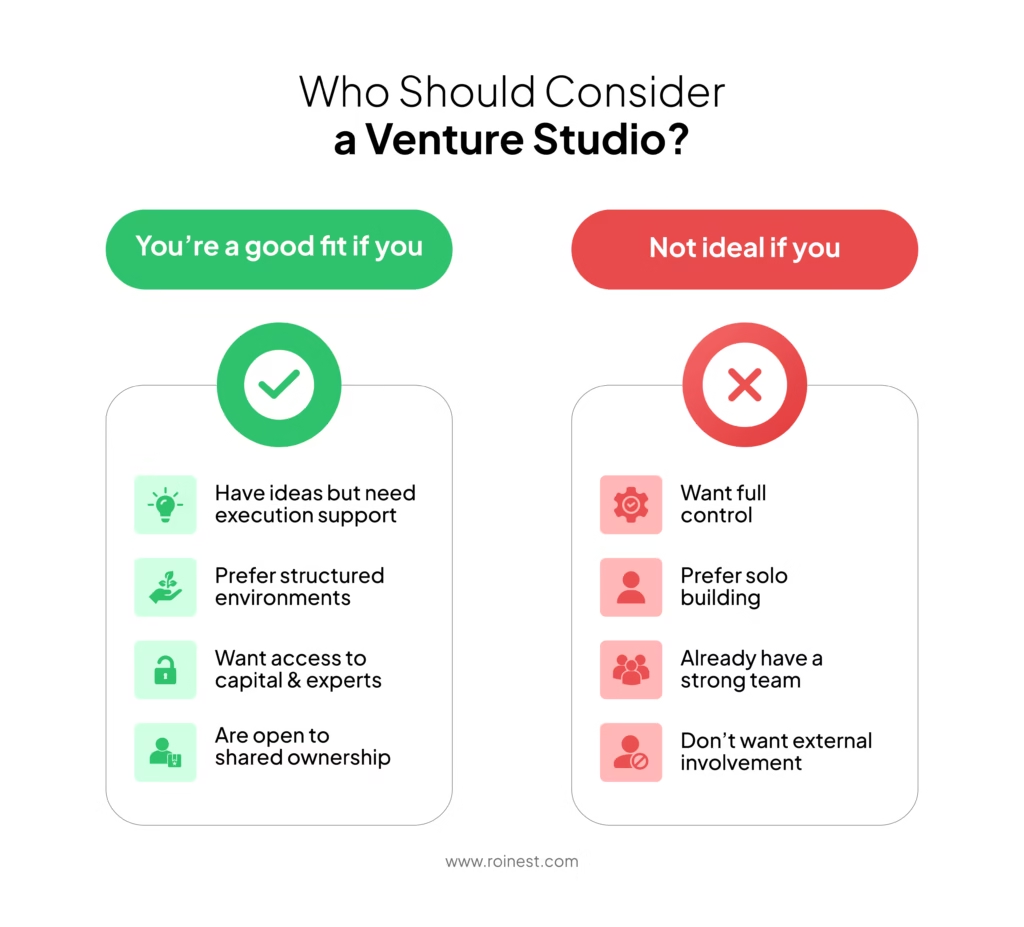
Who Should Consider a Venture Studio?
From amongst the multiple models available for the purpose of building new ventures in the market, this manner of working isn’t practical for everyone. But, it is highly recommended for a certain type of founder or startup.
Here’s the type of startup it suits best:
- First-time founders seeking guidance or mentorship
- Operators who want to build without starting from zero
- Investors looking to diversify risk
- Entrepreneurs interested in systematic startup building
In any case, if you are someone who values structure, speed and most importantly, collaboration to bring your idea to fruition, the startup studio model is perfect for you.
Conclusion
Startups, by their very nature, are highly dynamic. It goes without saying that the ways or methods to build them, too, are likely to be just as susceptible to evolution.
While venture capitalist firms and startup accelerators are always in the news for scaling some of the biggest ideas into sustaining businesses, they aren’t the only formats for creating a venture. An emerging method — the venture studio model — adds much needed structure and ongoing support to the entire process.
By combining capital, talent and repeatable processes, venture studios are turning company creation into a system, rather than a one-off effort.
FAQs
What exactly does a venture studio do?
A venture studio supports the startup building process from idea and early stage to viability by validating and supporting all functions till the organization is able to function independently. It provides teams, funding, expertise and hands-on support to ventures looking to grow.
What is the difference between venture studio and VC?
A venture studio creates and operates startups internally, while a VC or venture capital firm invests in startups which remain external to it. While studios cater to the day-to-day building and related needs of such organizations, VCs limit their support to funding and strategic advice.
Who invests in venture studios?
Venture studios are usually funded by institutional investors, venture capital firms or experienced entrepreneurs. Often studios are known to be built for the reinvestment of funds from a successful venture or startup, led by co-founders.
How does a venture studio make money?
A venture studio earns by holding equity in the startups it builds. When these ventures grow, get funded, go on to get acquired or become listed companies, venture studios benefit from the increase in value of their owned equity.